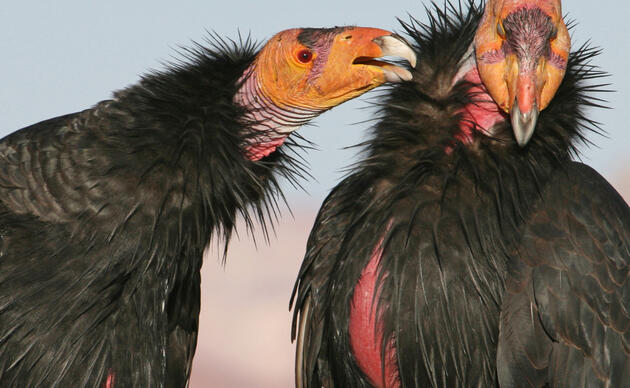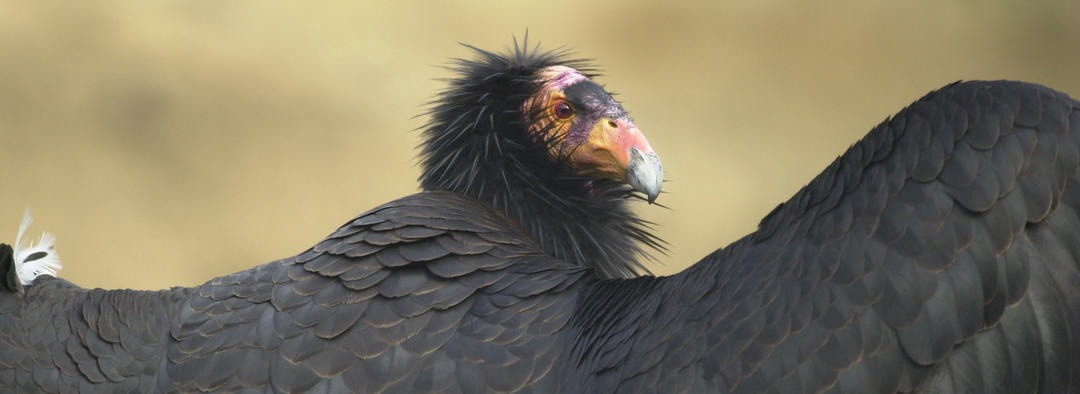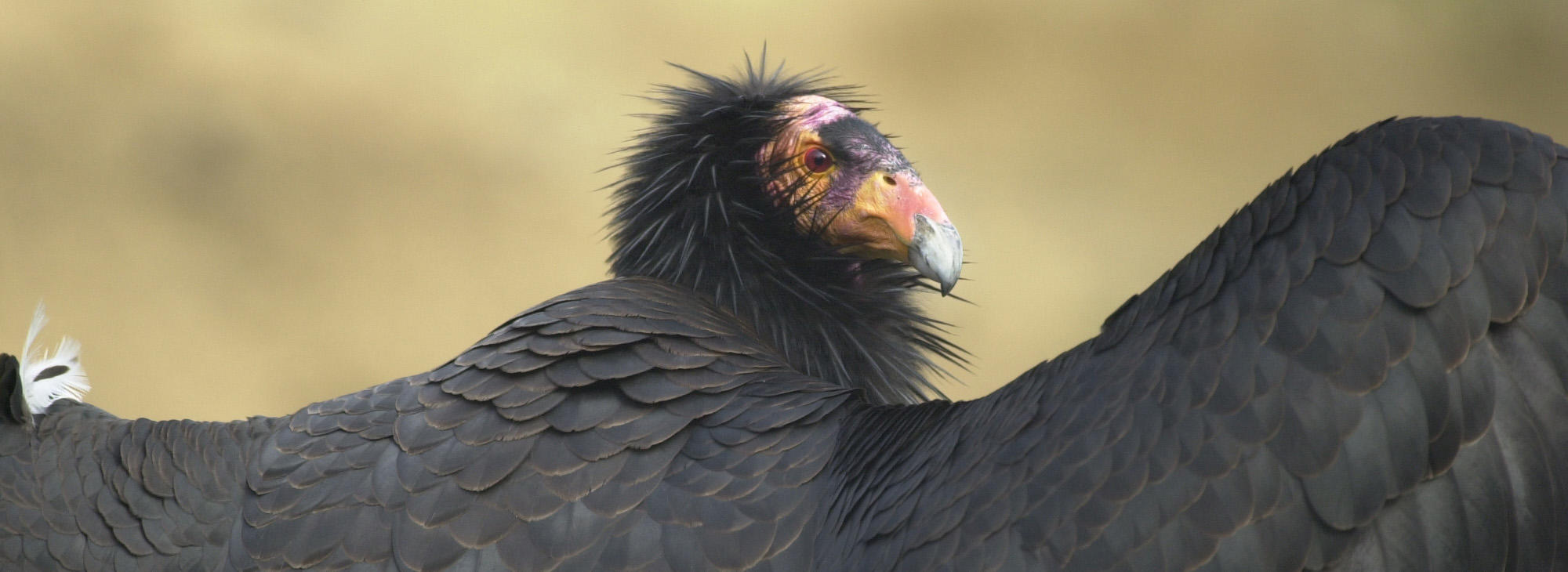
Sad news out of Utah this morning, where a California Condor was found dead, presumably due to lead poisoning. This brings to three, after we include two recent death in Arizona. The worst thing about the Utah death was that it was a mature breeding female. (photo by USFWS)
Poison from lead ammo claims three more California Condors
January 22nd, 2013 · by gfrost
Tags: Audubon California · Bird conservation · California Condor · Pollution

9 responses so far ↓
1 Trish Gussler // Jan 22, 2013 at 1:19 pm
This is not acceptable.
Sad and sickening.
2 Vicki Swenson // Jan 22, 2013 at 1:39 pm
This makes me sick, hunting with lead bullets is what idiots do.
3 Frankie Laney // Jan 22, 2013 at 1:39 pm
I thought the lead shot was gone. Can’t it be replaced with no-toxic shot? This is so bad.
4 Scott // Jan 22, 2013 at 2:01 pm
It’s the kind of thing you’d expect to hear out of Utah or Texas, no matter how much wildlife or humans are poisoned.
They’re not trainable or able to learn.
5 Matthew Correnti // Jan 23, 2013 at 9:21 am
Isn’t there a current campaign existing to “cure” this epidemic?
6 Wirt // Jan 23, 2013 at 2:49 pm
Scott is no doubt from the land of fruits and nuts, and cannot remove his head from it’s hiding place to discover that it is in CA that he and his Ilk are doing harm….oh well, whats new ?
7 ER // Jan 23, 2013 at 9:29 pm
What can we do? What would real action look like?
8 Alex Pitts // Jan 25, 2013 at 1:23 pm
This is terrible news. But, I think the headline should be a bit more circumspect until the tox report is back.
9 Anthony Canales // Jan 28, 2013 at 11:20 am
Alex Pitts is right in that one would need to see the metals levels of the blood taken for the necropsy, as well as if radiographs show any positive indications of ingestion of lead, differentiated from other kinds of radio-opaque objects.
At the same time, Frankie Laney is incorrect in assuming that there is non-toxic shot in the first place. Shot approved under 50 C.F.R 20.134 is labeled as approved for waterfowl hunting by USFWS through testing to only one standard, and a controversial one.
On the other hand, tungsten, bismuth, and copper (plated or solid) are all known to have various toxicities noted by agencies other than USFWS.
California and Washington State are banning use of copper for break pads and marine paints for issues related to water/riparian environments.
Tungsten is showing signs of being carcinogenic in mouse subjects, and has also shown to be a ground water contaminant at ammunition ranges where Army “green ammunition” was used for a few years.
Bismuth also has issues, and there are indications that some forms of steel shot may have a hexavalent chromium issue.
At this point, environmentalists should be aware that they are unable to call various kinds of projectiles “non toxic”, even though they are non-lead down to the parts-per-million level.
Respectfully,
Anthony Canales