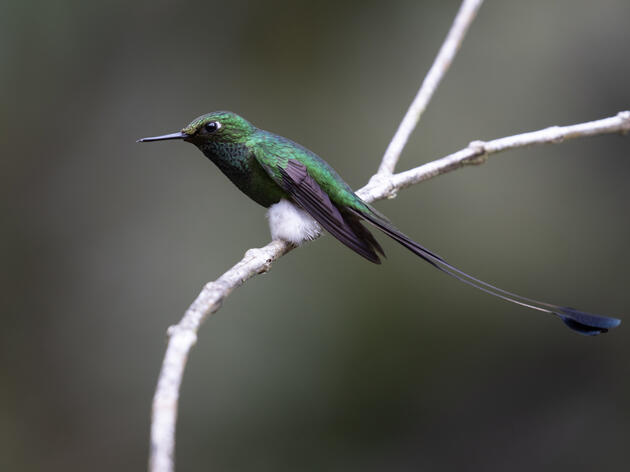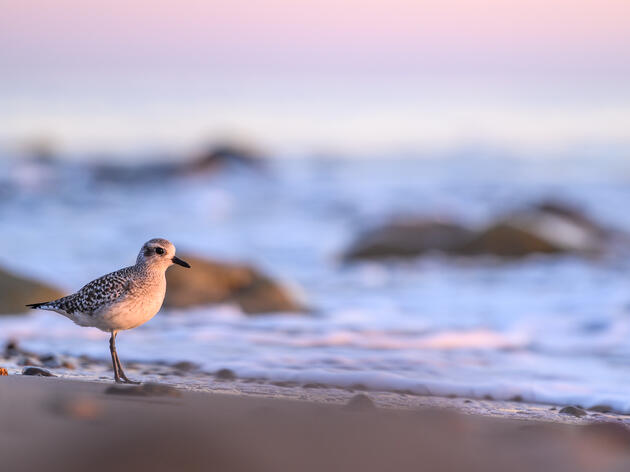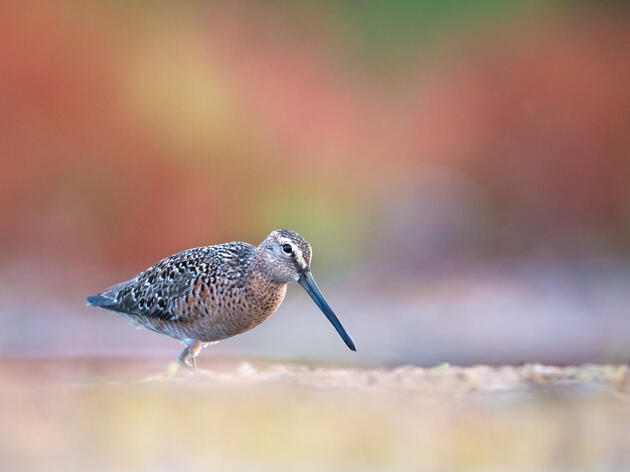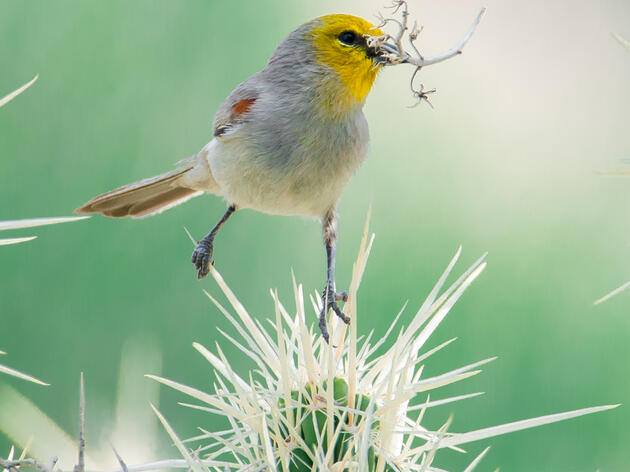
Since we’re talking about seabirds these days, let’s give some time to one of California’s most fascinating ones — the Brown Pelican. Ah, but where to begin? The crazy dives into the water? That beak? There are so many cool things about this bird that we just threw them into a list. Please add any that you think we’ve left out ( Photo copyright © 2010 Chuq Von Rospach (http://www.chuqui.com)”:
15 cool and interesting things about Brown Pelicans
June 18th, 2013 · Audubon California, Birding, seabirds
Stupid bird humor
June 17th, 2013 · Uncategorized
→ No CommentsTags: marsh wren·ren and stimpy·stupid bird humor
The Death Star Birdhouse
June 16th, 2013 · Birding
How do seabirds drink saltwater?
June 15th, 2013 · seabirds
If drinking saltwater is so bad for you, how do seabirds survive on pretty much nothing but? Well, it turns out that seabirds have a gland above their eyes that desalinates the water for them. Audubon Magazine has more.
In search of the elusive Ashy Storm-petrel
June 14th, 2013 · Audubon California, Bird conservation, Bird Habitat, seabirds
From Anna Weinstein, Seabird Program Manager:
You know you’re on the cutting edge of seabird conservation when you’re clambering up the side of a rocky outcropping, sticking your face into holes searching for a certain musky smell. That’s what I was doing about eight months ago when I spent two days and night surveying for the rare and elusive Ashy Storm-petrel on the aptly-named Bird Rock off Pt. Reyes, just north of San Francisco Bay. (photo above by USFWS)
Think Twice before Releasing a Balloon
June 13th, 2013 · Audubon California, Bird conservation, Important Bird Areas, Pollution, Uncategorized, Western Snowy Plover
It’s graduation season which means celebrations. It’s breeding season along our coast which means plovers scurrying along the beaches, seabirds bringing fish to their young, and sea lions and elephant seals growing and learning to swim. Snowy Plover monitors in San Luis Obispo county recently alerted us to the fact that while they were out surveying this past week, they found a distressing number of balloons suddenly littering miles and miles of our beaches. The matter is simple – balloons not only litter – they kill wildlife. The state of California has recognized the threat caused by helium balloons in law:
“No person or group shall release, outdoors, balloons made of electrically conductive material and filled with a gas lighter than air, as part of a public or civic event, promotional activity, or product advertisement.”
The County of Fairfax took it one step further in 2012, baning the release of latex balloons: http://sananselmofairfax.patch.com/groups/politics-and-elections/p/fairfax-council-ok-s-ban-on-the-release-of-latex-balloons
Whatever the type of balloon, marine mammals and sea turtles can perceive balloons as food such as jellyfish and balloons on shore can cause entanglement in birds feet and necks. Please help protect coastal wildlife by spreading the word about the threats of balloons.
→ No CommentsTags:
A new opportunity for the Western Snowy Plover
June 13th, 2013 · Audubon California, Western Snowy Plover
In May of last year, U.S. Fish & Wildlife Service revised the Critical Habitat designation for the pacific coast population of the Western Snowy Plover, which breeds in the US in coastal California, Washington, and Oregon. The revision increases critical habitat from 12,150 acres to 24,527 acres of coastal beach-dune ecosystem habitat along the US Pacific Coast essential to the survival and recovery of the snowy plover. The USFWS states that critical habitat, as defined by the Endangered Species Act, “identifies geographic areas containing features essential for the conservation of a threatened or endangered species, and which may require special management considerations or protection. Designation of critical habitat does not affect land ownership, establish a refuge or preserve and has no impact on private landowners taking actions on their land that do not require federal funding or permits.” (photo by Mike Baird)
Go ahead, fishies, make my day
June 13th, 2013 · Audubon California, seabirds
Video of Flying with Eagles over Kodiak, Alaska
June 11th, 2013 · Audubon Alaska, Bird videos
Watch some curious bald eagles check out a remote-controlled glider. Don’t you wish you were small enough to fit on that plane?
Let’s make a better future for our seabirds
June 11th, 2013 · Audubon California, seabirds
Seabirds, such as this Short-tailed Albatross, are among our most spectacular birds – and our most threatened. Of the 73 birds on the Audubon Watchlist, 22 are marine or coastal. According to the IUCN, of the 346 seabird species, 97 (28%) are globally threatened, and a further 10% are listed as Near Threatened. Almost half of all seabird species are known or suspected to be experiencing population declines. The albatross family is especially imperiled, with 17 of the 22 species currently threatened with extinction. Help us create a future for these birds.
New Audubon birding app gets Outside Magazine’s attention
June 10th, 2013 · Birding, National Audubon Society
We’ve always wondered why the adventure crowd wasn’t more into birding, turns out they might be.
→ 1 CommentTags: Audubon Guides·birding app·Green Mountain Digital·outside magazine
100s of Scientists Say “Protect Tongass Salmon “
June 10th, 2013 · Audubon Alaska
Did you know that 70 percent of wild salmon harvested from national forests in the US is from the Tongass National Forest in Alaska? Today, hundreds of scientists asked Congress to permanently protect Tongass watersheds important for salmon http://bit.ly/13iGluN. Protecting these watersheds would also help birds such as the Queen Charlotte Goshawk and Marbled Murrelet (like this juvenile in this US Fish & Wildlife Service photo by Rich MacIntosh), both of which rely on old-growth forest.
→ No CommentsTags: Marbled Murrelet·Northern Goshawk·salmon·Tongass
The Ashy Storm-petrel struggles
June 9th, 2013 · Bird conservation, seabirds
The Ashy Storm-petrel is one of California most threatened birds, carving out a tough life on the open ocean and nesting on isolated, rocky islands. While the U.S. Fish & Wildlife Service has denied this bird protection on the Endangered Species Act, its population continues to plummet. We’re fighting to ensure a future for this bird, and you can help.
Bear Valley Springs residents love their condors … not, exactly
June 8th, 2013 · Bird Habitat, California Condor, Endangered Species Act
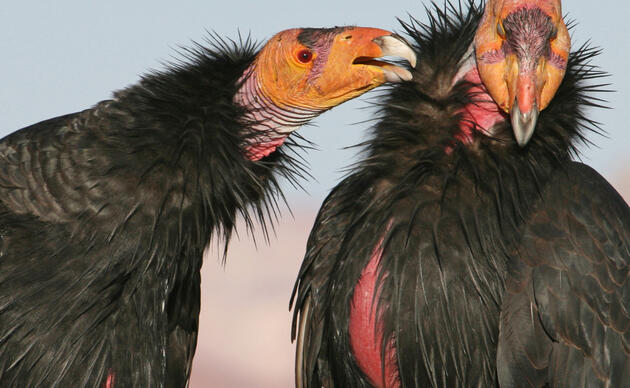
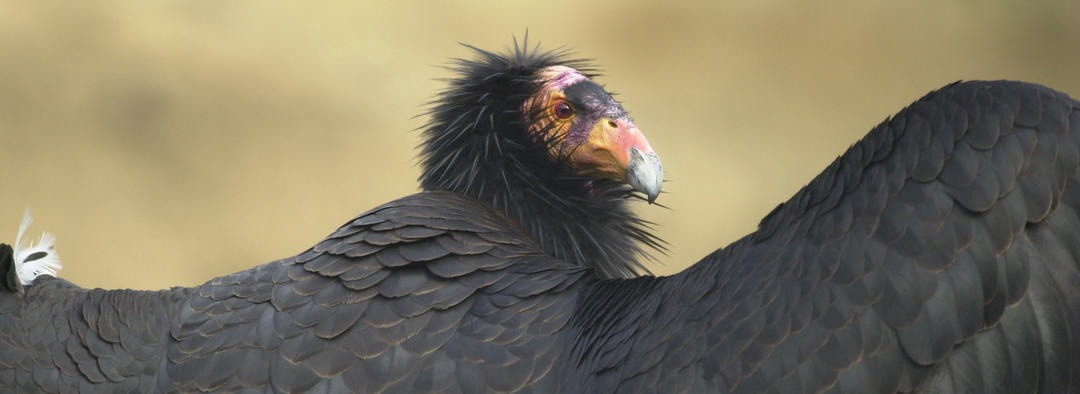
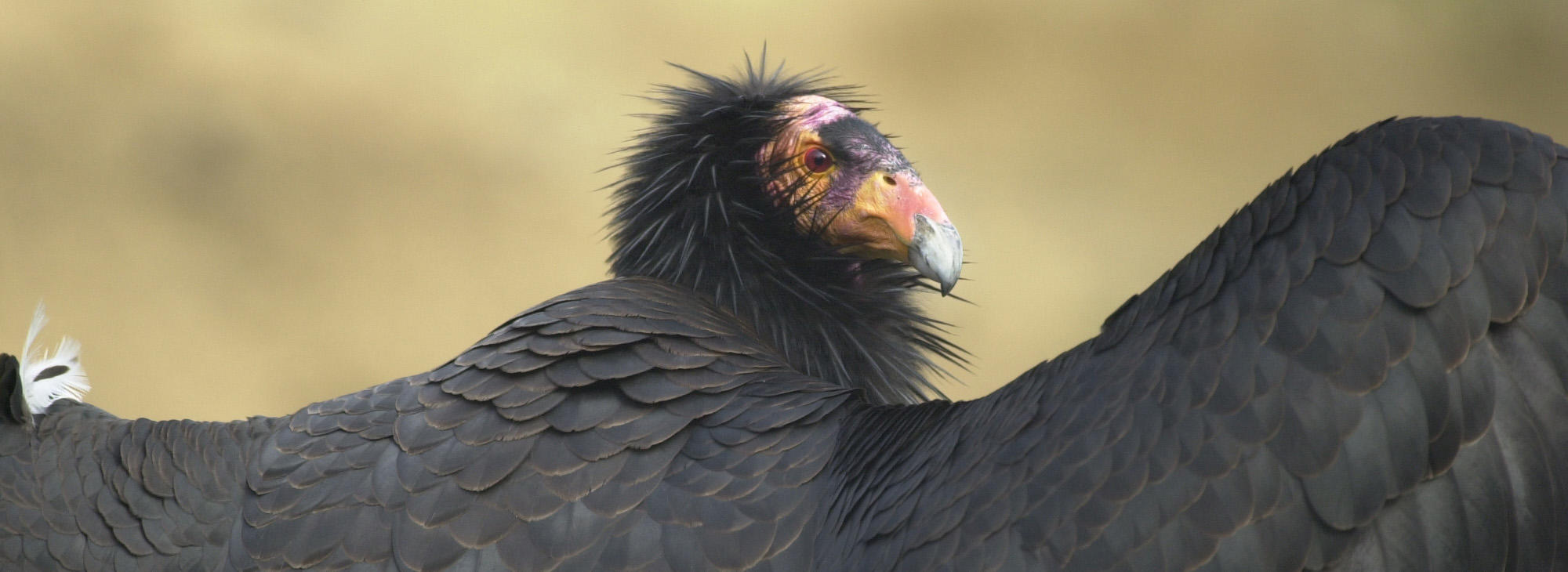
There’s an odd fact that California Condor experts will tell you, and it’s that the endangered birds actually like people. That’s a fact that residents of Bear Valley Springs in Kern County are learning the hard way, as the birds seem to be enjoying their community a little too much. Local officials from the U.S. Fish & Wildlife Service acknowledge the problem and are trying to figure out a way to keep the condors away from people’s homes and yards, saying that it’s not good for the birds to get too cozy with humans.